Last Updated on August 19, 2026
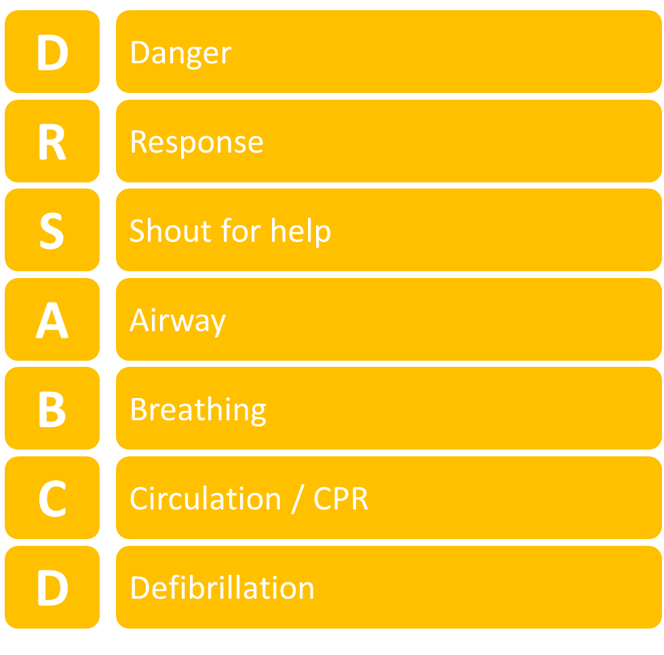
Danger
• Identify and make sure the is no
danger
e.g. blood spills, sharps, unsteady bed
Response
• Tap on patient’s shoulder, and ask “Hello, are you okay?” Glasgow Coma Scale (GCS)
• Quick assessment at
GCS
Open: https://www.myhouseman.my/glasgow-coma-scale-gcs/
Shout for Help
• Shout to call 999, get AED
Airway Assessment
• Look for any
feature
Features of upper airway obstruction: Airway Management Related Posts Airway Management Related Posts
• Hoarseness
• Stridor
• Gurgling sound
• Snoring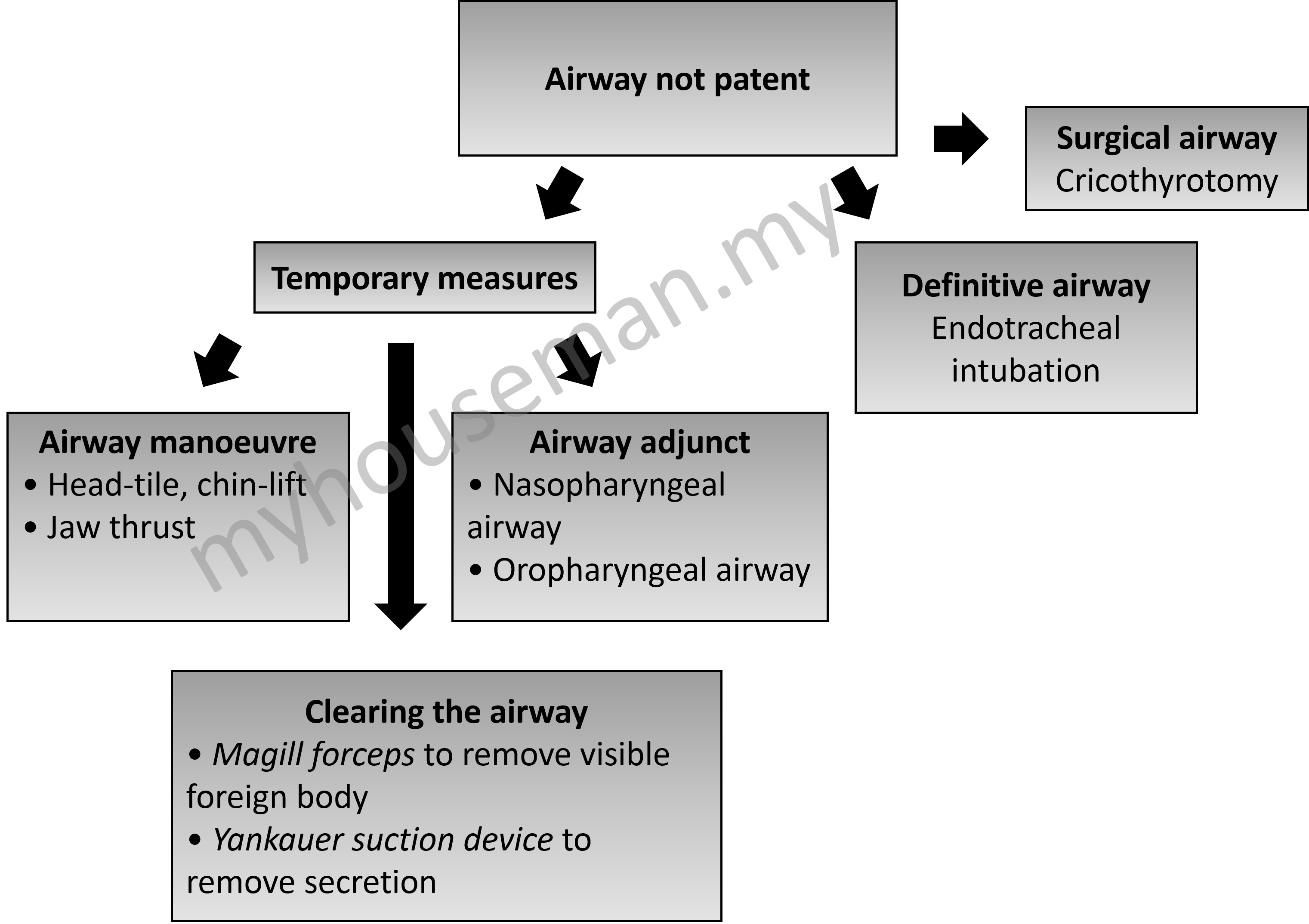
• Open
airway
• Remove any foreign body / obstruction in the mouth
Breathing Assessment
×Ideally breathing assessment & circulation assessment can be done simultaneously
Ideally breathing assessment & circulation assessment can be done simultaneously
• Look for chest movement — Any chest rise? Equal bilaterally?
Circulation Assessment
×Ideally breathing assessment & circulation assessment can be done simultaneously
/ CPR
Ideally breathing assessment & circulation assessment can be done simultaneously
• Check carotid pulse (5 – 10 seconds)
• If no pulse, proceed with chest compressions
• 30:2 — After every 30 compressions, give 2 rescue breath
• 2 or 5: Switch provider every 2 minutes OR every 5 cycles
• Check pulse every 2 minutes (take <10 seconds)
Defibrillation
• If no pulse, check for
shockable
Shockable rhythm: Ventricular fibrillation, pulseless ventricular tachycardia Non-shockable rhythm: asystole, pulseless electrical activity (PEA) Do not check pulse after defibrillation
• Shock if indicated
• 200 or 360: Biphasic defibrillator 200 J / monophasic defibrillator 360 J
• Continue CPR
immediately
Defibrillation VS Cardioversion
--- This content is for premium members only. ---
Further Reading
- https://web.facebook.com/permalink.php?story_fbid=10156647641817523&id=740237522
- Guide to the essentials in emergency medicine, 2nd ED
- CPR update, MedTweet
Take Home Message
Remember these magic numbers for BLS:
100 – 120
5 – 6
30 : 2
2 or 5
10
200 or 360