Last Updated on August 19, 2026
–Recognizing
difficult airway
• 4 dimensions of airway difficulties Airway Management Related Posts
• Airway assessment allows health provider to identify potential difficulties and compensate those difficulties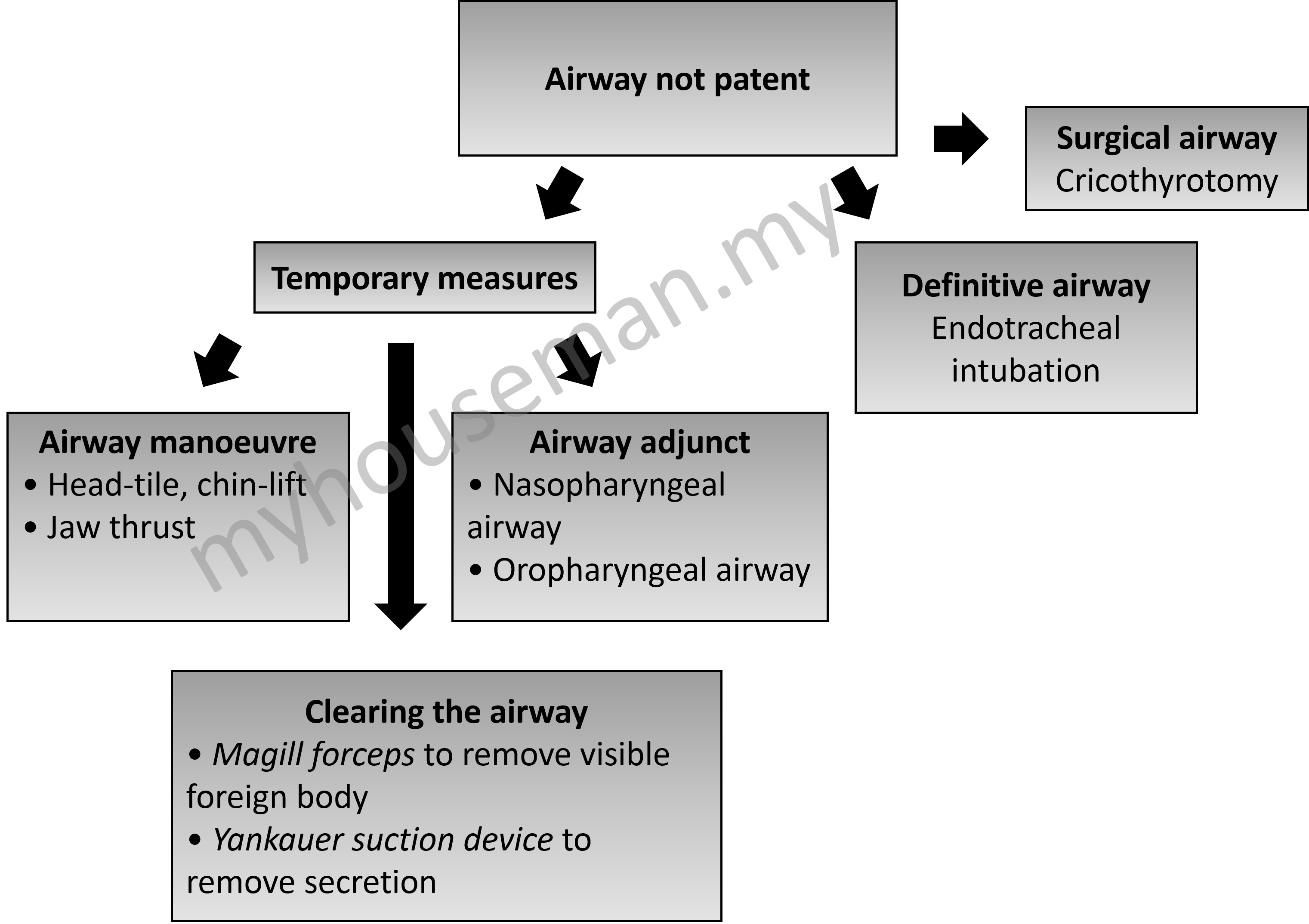
Content
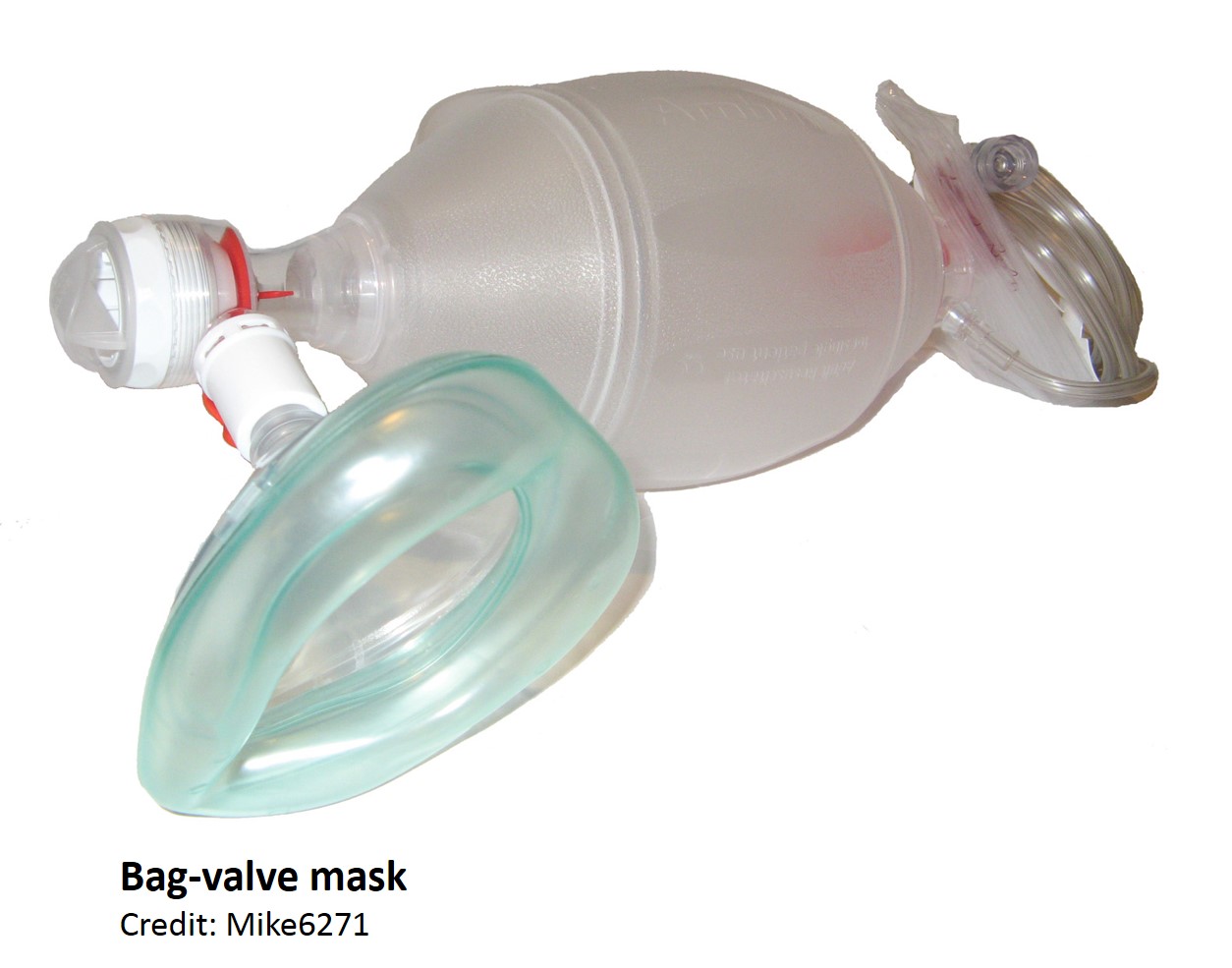
(1) Difficult to Ventilate with a BVM— MOANS×BVMBVM = Bag-Valve-Mask
Also known as: Ambu bag
(1) Difficult to Ventilate with a BVM — MOANS
• M: Male /
Difficult mask seal
e.g. presence of beard / debris / blood / vomitus around the landmarks that BVM is placed • Mallampati class I: soft palate, uvula, fauces, pillars visible **Ideally patient needs to sit up; alternatively use a tongue depressor if patient unable to sit up Further reading: https://litfl.com/mallampati-score/ Airway Management Related Posts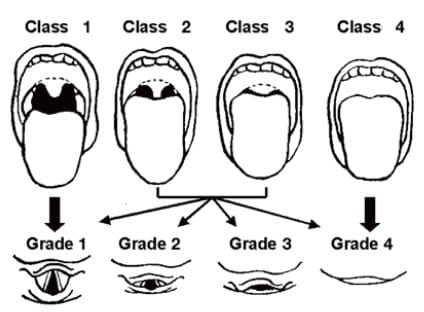
• Mallampati class II: soft palate, uvula, fauces visible
• Mallampati class III: soft palate, base of uvula visible
• Mallampati class IV: Hard palate only visible
=====
• Laryngeal grade 1: visualisation of entire glottic aperture
• Laryngeal grade 2: visualisation of just arytenoid cartilage or posterior portion of glottic aperture
• Laryngeal grade 3: visualisation of only epiglottis
• Laryngeal grade 4: visualisation of only tongue // tongue + soft palate
• O: Obstruction of upper
airway
===== Airway Management Related Posts
Further reading:
1. Prehospital management of difficult
airway
(2) Difficult Laryngoscopy & Intubation — LEMON
Look externally
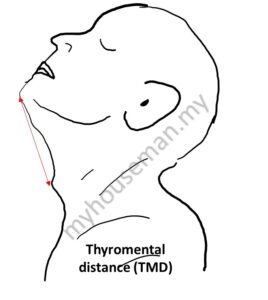
Evaluate 3-3-2 rule
Mallampati
• Mallampati class I: soft palate, uvula, fauces, pillars visible **Ideally patient needs to sit up; alternatively use a tongue depressor if patient unable to sit up Further reading: https://litfl.com/mallampati-score/
• Mallampati class II: soft palate, uvula, fauces visible
• Mallampati class III: soft palate, base of uvula visible
• Mallampati class IV: Hard palate only visible
=====
• Laryngeal grade 1: visualisation of entire glottic aperture
• Laryngeal grade 2: visualisation of just arytenoid cartilage or posterior portion of glottic aperture
• Laryngeal grade 3: visualisation of only epiglottis
• Laryngeal grade 4: visualisation of only tongue // tongue + soft palate
Obstruction
Neck mobility
4D approach
×an alternative approach to LEMON, when Mallampati score difficult in supine position / unable to use patient’s own fingers for 3-3-2 assessment
an alternative approach to LEMON, when Mallampati score difficult in supine position / unable to use patient’s own fingers for 3-3-2 assessment
Dentition
Distortion
Disproportion
Dysmotility
Notes
Causes of upper airway obstruction
• Intraluminal —
Q&A
Reference
1. The LEMON approach for predicting the difficult
airway
Airway Management Related Posts
2. Guide to the essentials in Emergency Medicine (2nd ed)