Last Updated on August 19, 2026
Introduction
Trimodal model of trauma mortality
•
First peak
Severe and likely nonsurvivable injuries: Severe injuries but patients arrive at the hospital alive and potentially treatable with prompt definitive care e.g. • Difficulty in following up post-trauma patients
• Brain stem injury
• Laceration of brain
• High spinal cord injuries
• Heart / Aorta / Large vessels lacerations
•
Second peak
•
Third peak
=====
Further reading:
https://www.ncbi.nlm.nih.gov/pmc/articles/PMC3603725/#:~:text=The%20first%20peak%20in%20the,after%20arrival%20to%20the%20hospital.
Polytrauma
• A clinical syndrome with severe injuries, involving two or more major organs OR physiological system, which will initiate an amplified metabolic and physiological response
Primary Survey — ABCDE
A – Airway + Cervical collar
Any hoarseness of voice?
Any stridor?
Facial or mandibular fracture?
Any foreign body?
On cervical collar?
Neck / Cervical region pain?
B – Breathing — Remember IPPA
central? Chest Spring • Chest spring positive (i.e. tenderness) suggests rib fracture Notes: • However, if chest wall is tender during palpation, rib fracture needs to be ruled out, e.g. by doing a chest X-ray. Hence, NO NEED to proceed with chest spring. https://www.youtube.com/watch?v=OnTtmQGjgEQ&t=0m22s
[tooltips keyword=’Neck vein distended”]Neck vein distended suggests tension pneumothorax?
Any chest wall bruises?
Any open wound at chest?
Equal chest rise?
Presence of flail chest?
Chest wall palpation /
chest spring
Others
• Respiratory rate
• SpO2
•Lung examination
C – Circulation
Pink? • Tachycardia may be masked by medications e.g. ß-blockers • Muffled heart sound ≈cardiac tamponade • TRO intra-abdominal injury Pelvic Spring • Pelvic spring positive (i.e. tenderness) may suggest pelvic bone fracture Notes: • However, if pelvic bone is tender during palpation, pelvic fracture needs to be ruled out, e.g. by doing a pelvic X-ray. Hence, NO NEED to proceed with pelvic spring. https://www.youtube.com/watch?v=eEmFULH4ql4
Warm peripheries?
CRT <2 sec in bilateral upper limbs and lower limbs?
Pulse — volume?
rate
BP, HR
CVS
Abdomen examination
• Look for tenderness / bruises / open wound
Pelvic spring
D -Disability
AVPU
AVPU A- Alert Glasgow Coma Scale (GCS) e.g. 3/3 reactive bilaterally
V- Respond to Verbal stimuli
P- Respond to Painful stimuli
U- Unresponsive to any stimuli
Open: https://www.myhouseman.my/glasgow-coma-scale-gcs/
Pupil size & reaction
Spine fracture & spinal cord injury level:
• Log roll – no spine tenderness, no step deformity?
• PR – anal tone intact, BCR (bulbocavernous reflex) present?
E – Exposure
Expose for complete examination
Document all abrasion/ any visible wound or deformity
Adjunct to primary survey
• Vital signs, Pulse oximetry (SPO2) • Alternatively VBG Unless contraindicated e.g. suspected pelvic fracture
• ECG
•
ABG
•
CBD
• Chest X-rays. Pelvic X-rays
• FAST scan
Resuscitation
Airway
Airway Management Related Posts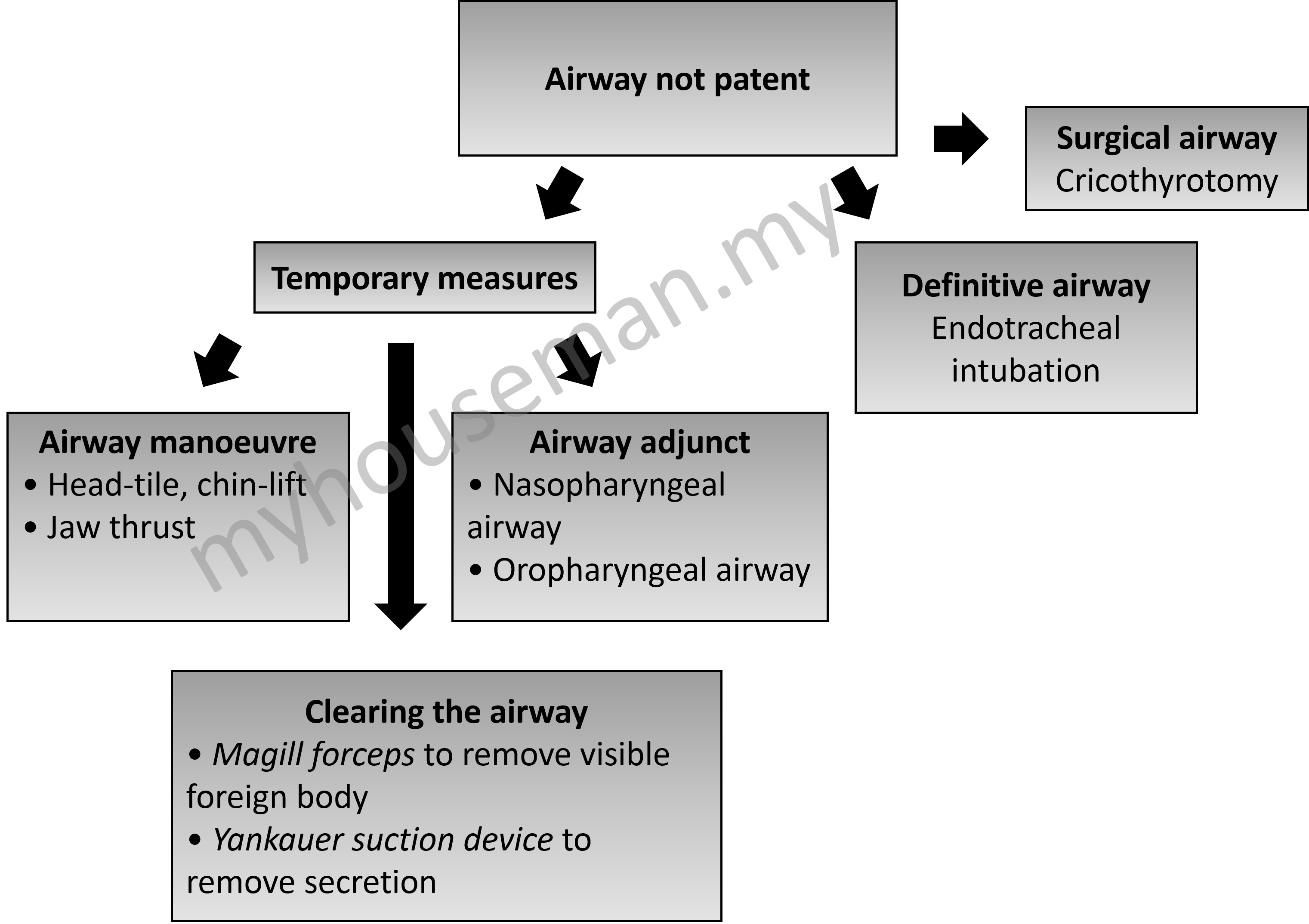
(a)
Airway
Airway Management Related Posts Gag Reflex A reflex contraction of the back of the throat, elicited by touching soft palate / uvula Airway Management Related Posts Airway Management Related Posts
Usually in unconscious patients:
• Suction & assess for
gag reflex
• Gentle chin lift / jaw thrust
• Oropharyngeal / Nasopharyngeal
airway
Definitive
airway
=====
(b) Cervical spine protection
• Apply cervical collar if suspect cervical injury
Breathing Maintenance
• Oxygen supplement
• Chest tube insertion if presence of tension pneumothorax
Circulation Maintenance
• Avoid hypothermia • Direct manual pressure / pressure dressing
• Fluid resuscitation
•
Control of bleeding
• Consider haemostatic suture if bleeding still not controlled by compression
Important signs
•
Raccoon sign
Raccoon sign Further reading: Battle Sign
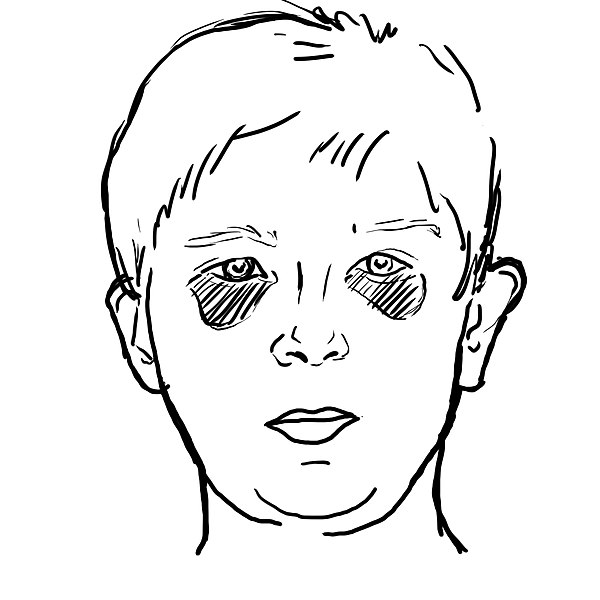 • Unilateral / bilateral progressive periorbital ecchymosis associated with edema due to pooling of blood around the eyes
• Associated with fractures of the base of the anterior cranial fossa
NCBI.
•
Battle sign
 • Bruising over the mastoid process / retroauricular region, typically due to head trauma
https://www.youtube.com/watch?v=NlYt4rO1B8k
Others
Trauma triad of death // Lethal triad
(i)
Hypothermia
Halts coagulation cascade, leading to coagulopathy causes lactic acidosis Decreases myocardial performance, leading to hypothermia
(ii)
Coagulopathy
(iii)
Metabolic acidosis
Further reading – wikipedia
Lethal diamond
(iv)
Hypocalcaemia
• Hypocalcaemia secondary to blood loss, or
• Hypocalcaemia secondary to citrates found in preserved blood (i.e. multiple blood transfusion)
• Early administration of calcium e.g. calcium gluconate 10% may improve trauma patient outcome
Further reading – Article
Other Notes
• Do not insert CBD if pelvic injury / urethral injury is suspected
Related Posts
Take Home Message
1. Do not proceed with secondary survey if primary survey is incomplete / patient still unstable / patient still with ongoing resuscitation
2. Bleeding is the predominant cause of preventable death post injury
3. In reality, we will do all the elements of primary survey simultaneously, but the flow is important to ensure no important thing missed