Last Updated on August 19, 2026
“Doktor, patient ini
GCS
Glasgow Coma Scale (GCS)
Open: https://www.myhouseman.my/glasgow-coma-scale-gcs/
Differential Diagnosis
• Hypoglycaemia Visit post: https://www.myhouseman.my/hyponatraemia/ Pulmonary embolism
• Electrolyte imbalance (e.g.
hyponatraemia
• Acute stroke – ischaemic / haemorrhagic
• Acute myocardial infarction
•
Pulmonary embolism
• Shock, secondary to primary cause
History Taking
Some history to ask if you are first time seeing this patient
• When was patient last well condition?
• Patient currently admitted for what?
• Any fall?
• Any weakness?
Investigation
Bedside
•
Dxt
Dxt An abbreviation of Dextrostix, commonly referred to capillary blood glucose
• ECG
Laboratory
• FBC, RP, Ca, Mg, PO4 Troponin T High-sensitivity Troponin T assay Conventional Troponin T assay Further reading:
•
Troponin T
• High-sensitivity = able to measure much more precisely at much lower concentration
• Raises within 1 hour of cardiac injury
• High negative predictive value
• 99th percentile: 14 ng/L (different lab might have different cut-off point)
• Unit: ng/L
• Unit: ng/mL
https://yk-health.org/wiki/High-sensitivity_Troponin-T
• ABG
Imaging
• CT brain (if indicated)
Management
• Attend patient stat Do not forget to check capillary blood glucose, TRO glycaemia Is patient in shock? If patient is in the ward, initially at stable cubicle Airway Management Related Posts
• Check vital signs and
capillary blood glucose
• Assess patient based on
ABCDE
• Transfer patient to
acute cubicle
Consideration:
• If patient has no pulse, follow the ALS protocol
• May require rapid sequence intubation to secure
airway
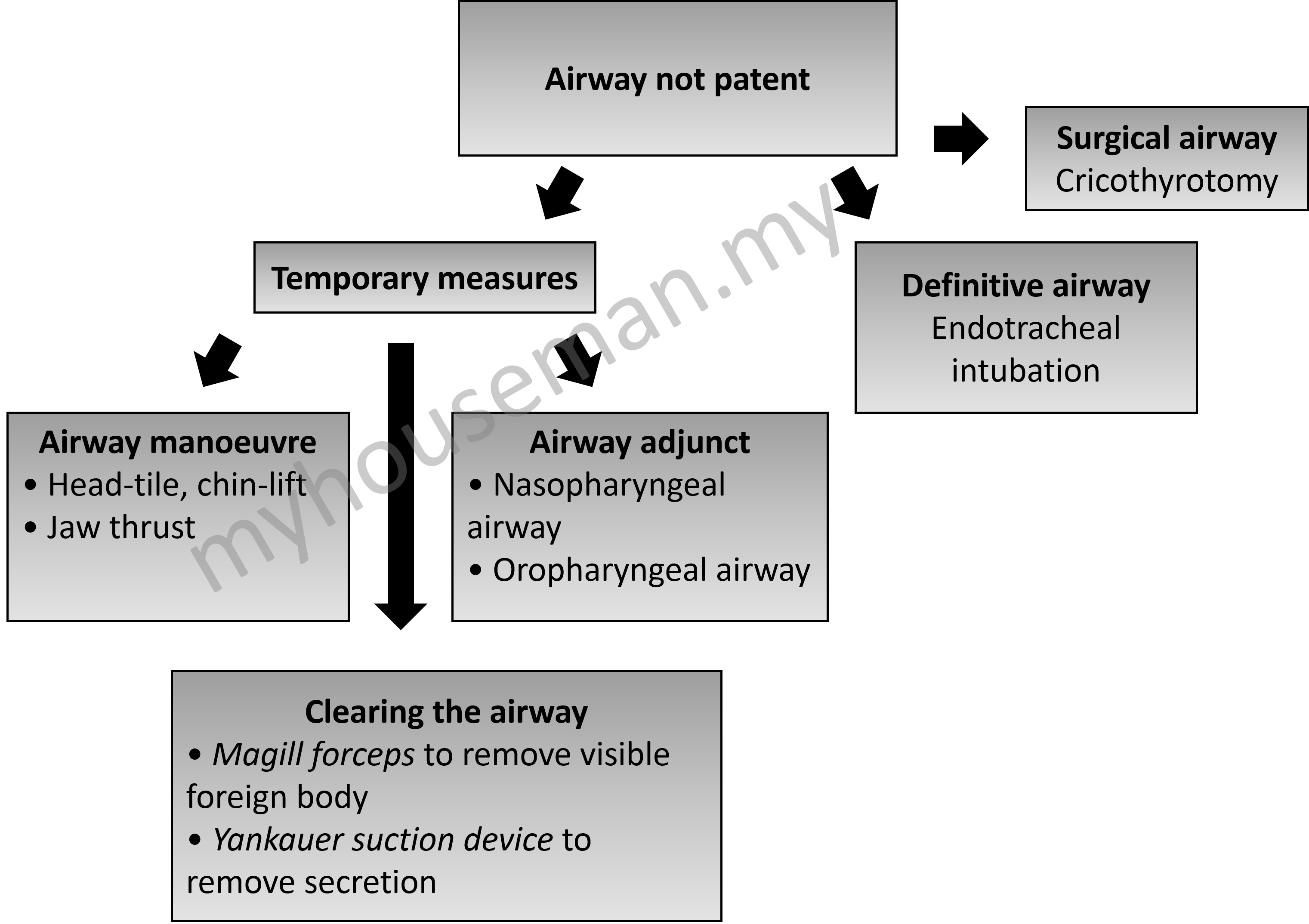
• May require Anaesth referral
=====
Identify underlying cause and treat accordingly