Last Updated on August 19, 2026
u003cstrongu003eIntroduction / Definitionu003c/strongu003e
Pathological jaundice | Physiological jaundice | Prolonged jaundice due to haemolysis e.g. G6PD deficiency, ABO incompatibility, hereditary spherocytosis permanent brain damage due to high unconjugated bilirubin level, leading to e.g. cerebral palsy, hearing loss
Definition
•
Pathological jaundice
• Prolonged jaundice: visible jaundice (or serum bilirubin >85 µmol/L) that persists beyond 14 days in life in term infant or 21 days in preterm infant
Implications
• Unconjugated bilirubin → deposited in basal ganglia →
kernicterus
u003cstrongu003eRisk Stratification – Low Risk, Medium Risk, High Risku003c/strongu003e
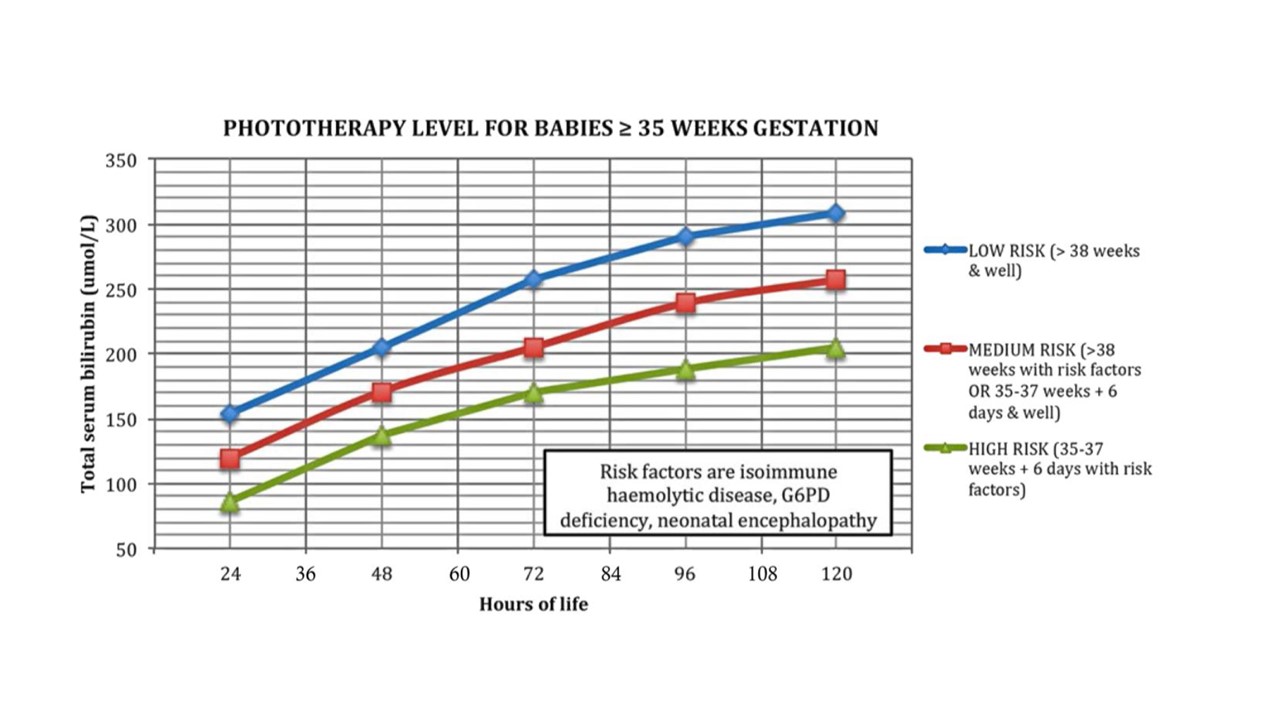
Risk stratification It must be a proven sepsis. Presumed sepsis is not a risk factor for NNJ
1st rule: Gestational age
2nd rule: Risk factors
– Isoimmune haemolytic disease (mother blood group O+ve / mother Rhesus negative)
– G6PD deficiency
– Neonatal encephalopathy
– Neonatal asphyxia
–
Sepsis
| 35 – 376/7 weeks | ≥38 weeks | |
| Low risk | — | No risk factor |
| Medium risk | No risk factor | With risk factors |
| High risk | With risk factors | — |
NOTE: Presence of >1 risk factor will NOT further increase the risk!! Examples:
– 38 weeks + G6PD deficiency = Medium risk
– 38 weeks + G6PD deficiency + Mother O+ve = Medium risk (not high risk)
=====
Re-stratification of risk
Upgrading: from low to medium risk // from medium to high risk
Downgrading: from high to medium risk // from medium to low risk
Example:
37 weeks + Mother O+ve = high risk
Later on results of baby’s ABO is O+ve, direct Coombs test negative
Re-stratified into medium risk
u003cstrongu003eInvestigationsu003c/strongu003e
Neonatal jaundice surveillance If bilirubin from TCB more than 200 µmol/L, TSB should be taken to verify the bilirubin level Consult with your lab. If reticulocytes count is included in FBP, then no need to order Reticulocytes indicated if NNJ day 1 of life / severe jaundice trace G6PD sent after delivery • Daily TCB for NNJ surveillance • For monitoring of patient on NNJ treatment (phototherapy / exchange transfusion / IVIG)
• Transcutaneous bilirubinometry (
TCB
Neonatal jaundice workup
• Total serum bilirubin (TSB)
• Full blood picture or Full blood count
•
Reticulocytes
• Patient’s ABO + RhD
• Patient’s
direct Coombs test
• Trace mother’s blood group
**Not all NNJ require ABO & Coombs test, unless suspicious of ABO incompatibility
Other investigations
•
G6PD
• Blood C&S, urine C&S if infection/sepsis suspected
Neonatal jaundice (inpatient) monitoring
•
TCB
• If infant is on phototherapy, TCZB should not be done as TCB is inaccurate compared to TSB
• If on intensive phototherapy, usually TSB 4 – 6 hourly
u003cstrongu003eTreatmentu003c/strongu003e Options
1. Phototherapy For readmitted babies without signs of ABE, if TSB above ET, repeat TSB 2 – 3 hourly & consider ET if TSB remains above ET level after intensive phototherapy for 6 hours
• ‘Intensive phototherapy’ = ‘double phototherapy’
=====
2. Exchange transfusion
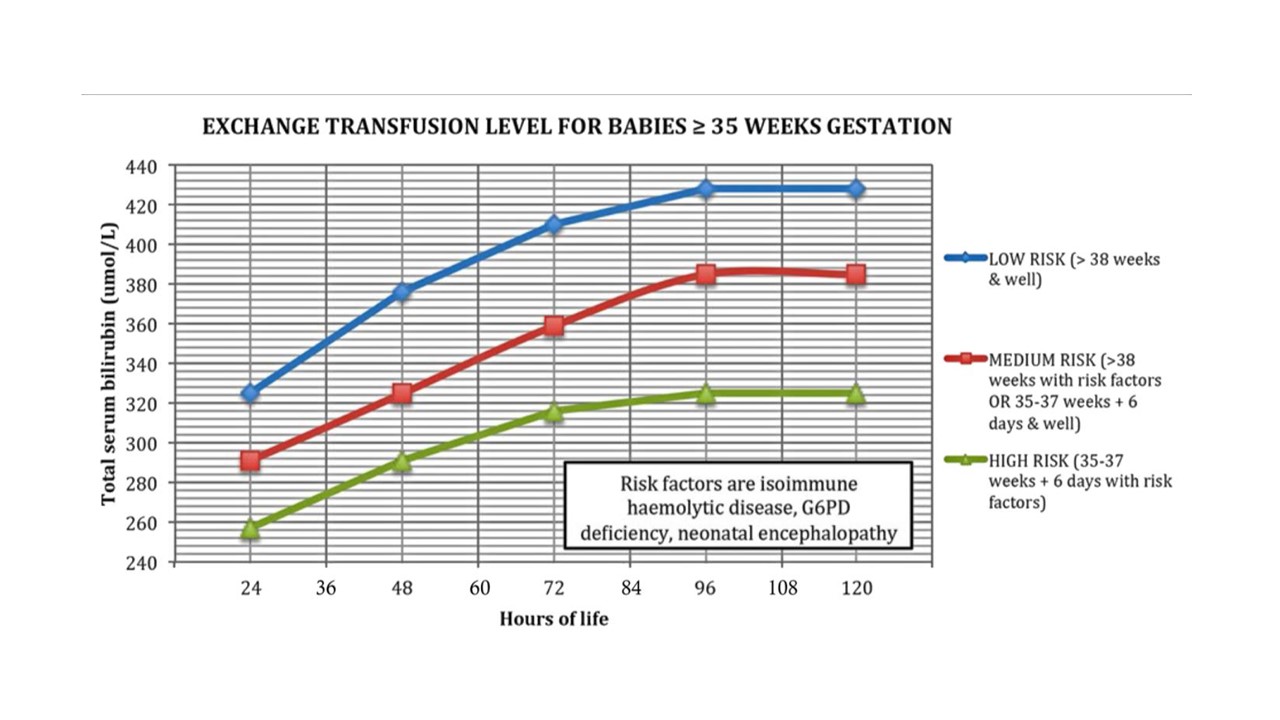
ET guideline for babies ≥35 weeks gestation
• Indications of ET:
–> Signs of acute bilirubin encephalopathy (ABE), or
–> TSB >85 µmol/L above ET level
–> TSB
rises to ET levels
3. IV Immunoglobulin (IVIG)
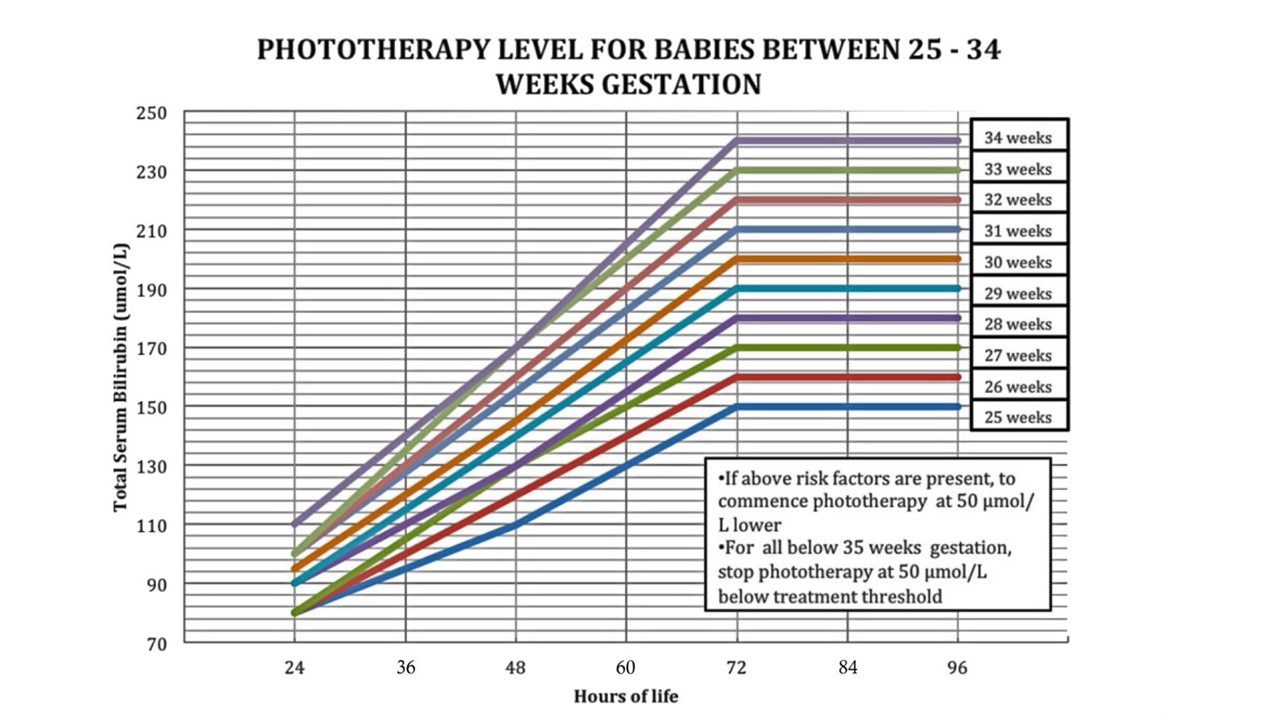
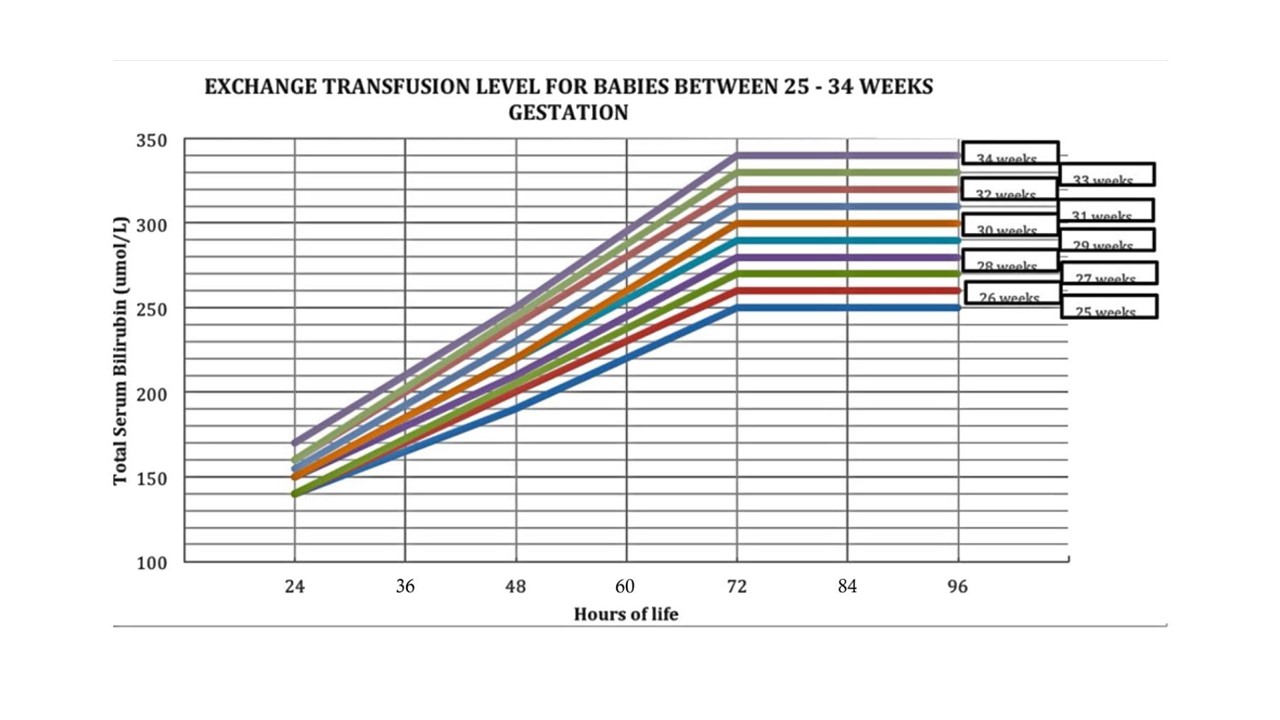
u003cstrongu003ePhototherapy Level u0026amp; Exchange Transfusion Levelu003c/strongu003e
u003cstrongu003eProlonged jaundiceu003c/strongu003e
Causes Abbreviation: UTI Urinary tract infection ===== 💡Remember If Urine FEME / Urine dipstick shows feature of UTI (leucocyte positive, nitrite positive), do renal punch to look for sign of pyelonephritis → Reticulocytes & FBP to look for haemolysis Significant ↑ direct bilirubin (conjugated bilirubin): more than 15% → TRO hypothyroidism to look for biliary atresia
(i) Conjugated hyperbilirubinaemia (>25 µmol/L)
• Biliary tree abnormalities e.g. biliary atresia
• Neonatal hepatitis
• Metabolic disorders e.g. alpha-1 antitrypsin deficiency, citrin deficiency
(ii) Unconjugated hyperbilirubinaemia
• Haemolytic anaemia e.g. G6PD deficiency, congenital spherocytosis
• Hypothyroidism
• Infection, e.g.
UTI
• High GI obstruction e.g. pyloric stenosis
Signs & symptoms e.g.
• Pale stool
• Poor weight gain
• Pallor
• Hepatosplenomegaly
Prolonged jaundice workup
• Total serum bilirubin (+direct & indirect)
•
FBC + reticulocytes // FBP
→ ↑ WCC ≈ infection
•
Liver function test
•
Thyroid function test
• UFEME ± Urine C&S
• Trace G6PD screening taken at birth
—– —– —– —– —–
Other Ix
• TORCHES
• HBsAg, Anti-HCV
• Alpha I antitrypsin
Imaging
•
USG HBS
Take Home Messages
1. Physiological jaundice is a diagnosis of exclusion
2. Whenever there is a NNJ, the underlying cause should be sought and documented in case note
3. It’s important to stratify the risks correctly to prevent missed phototherapy
4. When TCB is higher than photo level, you can document the plan to start phototherapy, and don’t forget to inform the nurse
5. TCB of more than 200 μmol/L is not reliable, and requires TSB stat to confirm the bilirubin level, but you can still start phototherapy if TCB higher than photo-level
References
1. Paediatric protocol (4th ed)